









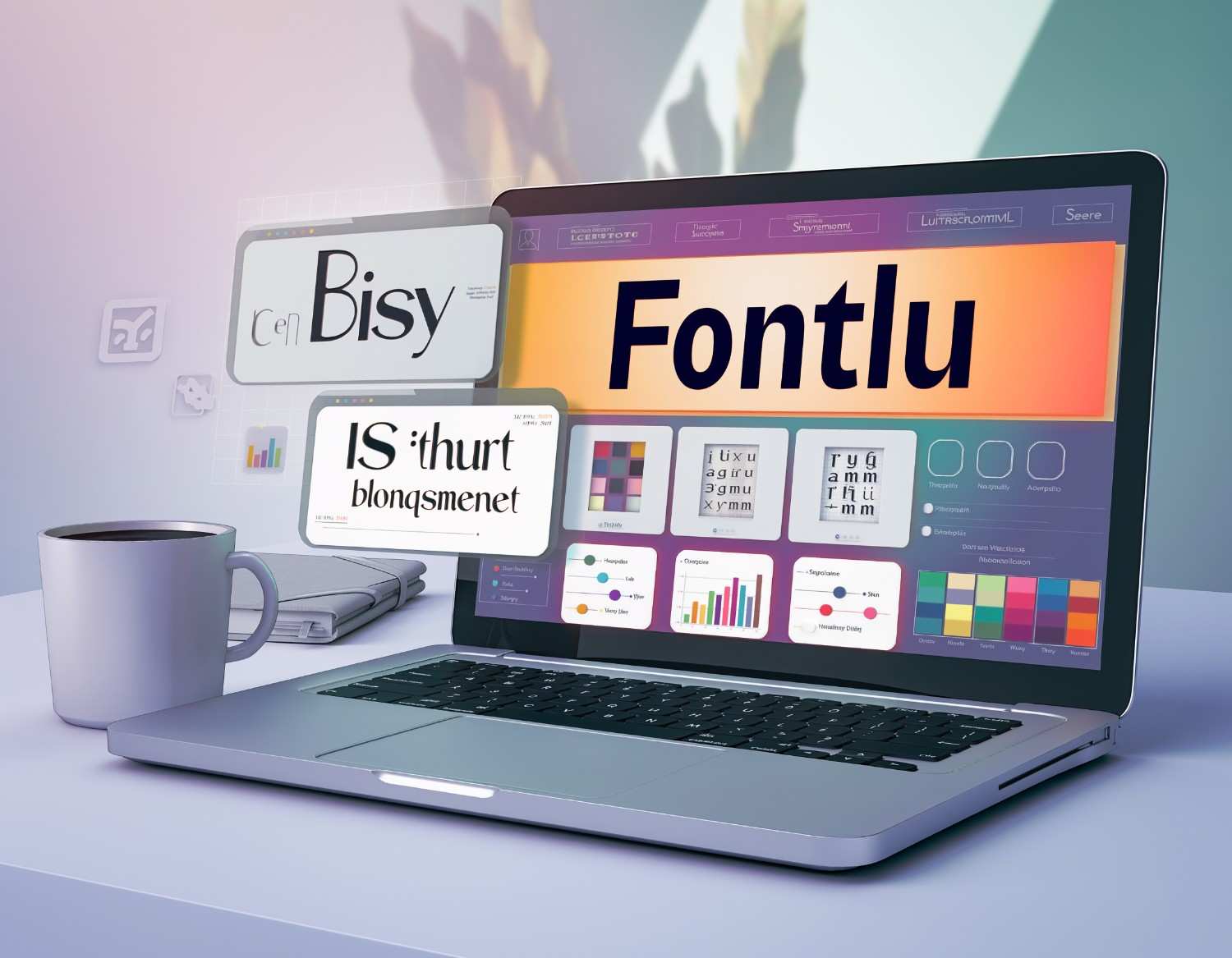
Most digital products fail not because of poor ideas, but because of inconsistent execution. You see it in subtle ways—misaligned interfaces, inconsistent typography, and experiences that feel “almost right” but not quite polished. This is where fontlu becomes more than a design concept; it becomes a systems-level approach to solving one of the most overlooked problems in product development: typographic inconsistency at scale.
For startup founders, product designers, and engineering teams, fontlu represents a shift in thinking. It reframes typography not as a visual layer, but as infrastructure—something that must be engineered, standardized, and scaled just like APIs or databases.
What Is Fontlu and Why It Matters in Modern Product Design
Fontlu can be understood as a structured approach to managing typography across digital ecosystems. Instead of treating fonts, sizes, and spacing as isolated design choices, fontlu organizes them into a coherent system that can be reused, scaled, and maintained across platforms.
In traditional workflows, typography decisions are often made in design tools and loosely translated into code. This creates gaps. What looks consistent in a Figma file often becomes inconsistent in production due to manual implementation, platform differences, or developer interpretation.
Fontlu addresses this gap by turning typography into a shared system between design and engineering. It ensures that what is designed is exactly what is built—without degradation.
In a world where products span mobile apps, web platforms, dashboards, and embedded systems, that consistency is no longer optional. It is foundational.
The Evolution of Typography Toward Fontlu
To understand fontlu, it helps to look at how typography has evolved alongside digital products.
In the early web era, typography was limited to system fonts and basic styling. Designers had little control, and consistency was difficult to achieve across browsers.
As web technologies matured, custom fonts and CSS introduced more flexibility. Designers gained control, but systems became fragmented. Each project defined typography differently, leading to inconsistency across products.
Then came design systems. Companies began standardizing components, colors, and spacing. Typography was included, but often as an afterthought—defined visually but not structurally.
Fontlu represents the next stage in this evolution. It treats typography as a first-class system, not a supporting detail. It connects design tokens, development frameworks, and user experience into a unified typographic architecture.
Fontlu as a System, Not a Style Choice
One of the biggest misunderstandings about typography in digital products is treating it as a style decision. Fontlu rejects that idea.
Instead, it defines typography as a system of rules and relationships. Every text element—headings, body text, captions—is governed by structured parameters.
These include:
- Font families and weights
- Scale ratios between text sizes
- Line height consistency rules
- Spacing and hierarchy logic
- Responsive behavior across devices
When these elements are systemized, typography stops being subjective and becomes predictable.
This predictability is what allows large teams to collaborate without breaking visual consistency.
How Fontlu Works in Real Product Environments
In practice, fontlu operates as a bridge between design and development.
Designers define typography rules using a structured system. Developers implement those rules using tokens or configuration files. Instead of manually assigning font sizes or weights, they reference predefined values.
This removes ambiguity. A “heading-large” is always the same—regardless of where it appears in the product.
This approach scales particularly well in large organizations where multiple teams contribute to the same product. Without a system like fontlu, inconsistencies accumulate quickly.
A Comparative View: Traditional Typography vs Fontlu
To better understand the shift, consider how traditional approaches differ from a fontlu-driven system:
| Dimension | Traditional Typography | Fontlu Approach |
|---|---|---|
| Definition | Project-specific and manual | System-wide and standardized |
| Consistency | Variable across teams | Unified across platforms |
| Implementation | Manual coding decisions | Token-based architecture |
| Scalability | Difficult to maintain | Designed for large-scale systems |
| Collaboration | Design-first, dev interpretation | Shared system between teams |
This comparison highlights a key insight: fontlu is not just about making typography better—it is about making it scalable and maintainable.
The Role of Design Tokens in Fontlu
At the core of fontlu lies the concept of design tokens.
Design tokens are structured variables that store typographic rules in a machine-readable format. Instead of hardcoding values like “16px font size” or “bold weight,” teams define reusable tokens such as “body-medium” or “heading-large.”
These tokens are then used across both design and codebases, ensuring consistency.
For example, when a designer updates the “heading-large” token, that change automatically propagates across the entire product—without requiring manual updates in multiple places.
This creates a single source of truth for typography.
Why Fontlu Improves User Experience
Typography is often invisible when done well—but immediately noticeable when done poorly.
Fontlu improves user experience by ensuring consistency, readability, and hierarchy across interfaces. When users move between screens, they experience continuity rather than visual disruption.
This has a direct impact on usability. Clear typographic hierarchy helps users scan information faster. Consistent spacing reduces cognitive load. Predictable patterns improve navigation.
In essence, fontlu reduces friction between users and information.
Performance and Technical Efficiency
Beyond visual consistency, fontlu also contributes to technical performance.
Poorly managed typography can lead to unnecessary font loads, excessive CSS overrides, and rendering inefficiencies. Fontlu reduces these issues by standardizing font usage and minimizing redundant assets.
It also encourages the use of optimized font formats and variable fonts, which improve load times and reduce bandwidth usage.
For startups operating at scale, these optimizations can translate into measurable performance gains.
Accessibility as a Core Principle of Fontlu
Modern digital products must be accessible by default—not as an afterthought.
Fontlu integrates accessibility into its system design. This includes ensuring sufficient contrast ratios, scalable font sizes, and readable line spacing across devices.
By standardizing these rules at the system level, teams avoid inconsistent accessibility implementation across features.
This not only improves usability for all users but also helps companies meet regulatory standards more efficiently.
Challenges in Implementing Fontlu
Despite its advantages, implementing fontlu is not without challenges.
The first challenge is organizational alignment. Designers, developers, and product managers must agree on typographic standards. Without alignment, systems can quickly fragment.
The second challenge is migration. Existing products often have inconsistent typography built over years. Transitioning to a fontlu system requires careful refactoring.
The third challenge is discipline. A system is only effective if teams follow it. Deviating from established tokens or rules undermines consistency.
However, these challenges are transitional. Once implemented, the long-term benefits outweigh the initial effort.
Fontlu as a Competitive Advantage for Startups
For startups, fontlu is more than a design improvement—it is a strategic advantage.
Early-stage companies often move fast, which leads to inconsistency. As they scale, these inconsistencies become technical debt.
By adopting fontlu early, startups can avoid this debt altogether. They build products that are easier to maintain, easier to scale, and more visually cohesive.
This creates a better user experience and reduces long-term engineering overhead.
In competitive markets, that efficiency can make a significant difference.
The Future of Typography with Fontlu
As digital products become more complex, typography will need to become more adaptive.
We are already seeing interfaces that respond dynamically to user behavior, screen size, and context. Fontlu provides the structural foundation for this evolution.
Future systems may integrate AI-driven typography optimization, where font sizes and spacing adjust automatically based on readability patterns.
In this context, fontlu is not just a system for today—it is a framework for the future of adaptive design.
Conclusion: Why Fontlu Is a Foundational Shift, Not a Trend
Fontlu represents a quiet but significant shift in how digital products are built. It moves typography from a visual decision to a system-level discipline—one that impacts scalability, performance, and user experience.
For founders and product teams, this shift is critical. Products are no longer defined only by features, but by the quality and consistency of their execution.
Fontlu ensures that consistency is not accidental—it is engineered.
In a digital landscape where users expect seamless experiences, systems like fontlu are no longer optional. They are foundational.