Tech
What Is NCIS? A Complete Guide to the Naval Criminal Investigative Service

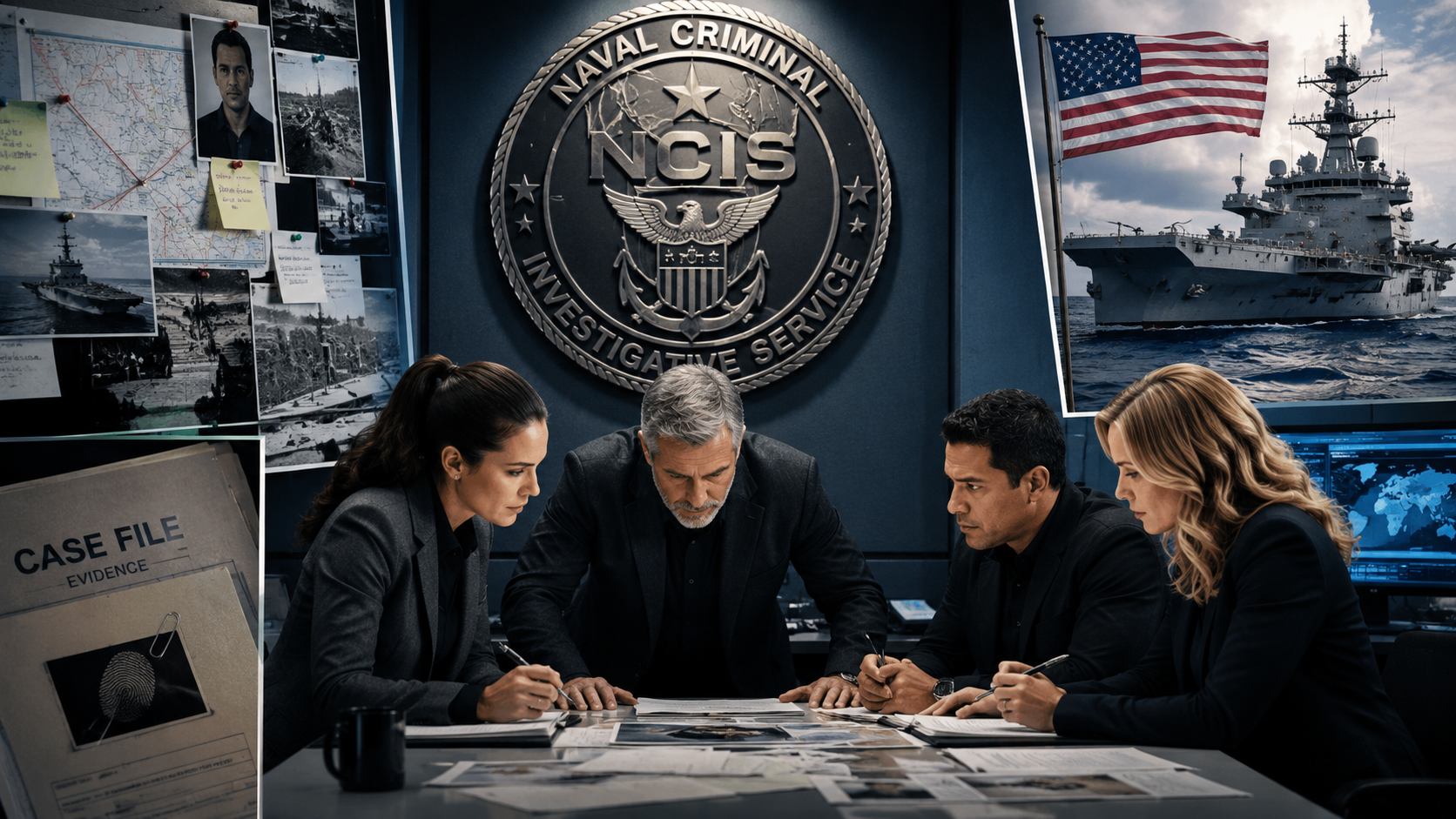
Most people know the name from a long-running television franchise, but the real organization behind it has little to do with courtroom drama or car chases. NCIS is a federal law enforcement agency that protects the Navy and Marine Corps from crime, espionage, and terrorism, both at home and around the world.
If you searched for this topic wondering what the agency actually does, how it’s different from local police, or whether the TV show reflects reality, this guide walks through all of it in plain language.
Direct Answer
NCIS stands for Naval Criminal Investigative Service. It’s a federal agency under the U.S. Department of the Navy that investigates felony crimes, counterintelligence, cyber threats, and terrorism involving Navy and Marine Corps personnel, facilities, and equipment. Unlike military police, it’s staffed mostly by civilian special agents with authority similar to the FBI, and it operates worldwide wherever the Navy and Marine Corps are stationed.
What the Agency Does
The core job of the agency is protecting two branches of the armed forces from threats that go beyond routine discipline problems. That includes:
- Investigating serious crimes such as murder, sexual assault, and major theft
- Countering foreign intelligence activity aimed at naval personnel or technology
- Responding to cyberattacks against Navy and Marine Corps networks
- Preventing terrorism against ships, bases, and service members
- Conducting protective service work for senior Navy officials
A civilian contractor stealing classified submarine blueprints, a sailor’s off-base assault case, or a phishing campaign targeting a naval base’s network could each fall under this agency’s jurisdiction, depending on the details.
A Brief History
The organization traces back to 1882, when the Navy first created an internal detective branch, but it took its modern shape in stages. It operated as the Office of Naval Intelligence’s investigative arm for decades, then became the Naval Investigative Service in 1966. In 1992, following mishandled investigations into cases like the Tailhook scandal, the Navy restructured the organization and renamed it in 1993 to reflect a more independent, civilian-led model. That reorganization is why today’s leadership is mostly composed of professional federal agents rather than military officers.
How It’s Organized
The agency reports to the Secretary of the Navy but functions with investigative independence, similar to how an inspector general’s office operates apart from the people it might need to investigate. It’s headquartered in Quantico, Virginia, and runs field offices across the United States and at overseas naval installations.
Special agents are trained at the Federal Law Enforcement Training Center, the same institution that trains agents for agencies like the Secret Service and Homeland Security Investigations. That shared training pipeline is part of why the agency’s agents carry law enforcement powers comparable to other major federal agencies rather than the limited authority of military police.
Who Falls Under Its Jurisdiction
Jurisdiction covers active-duty Navy and Marine Corps personnel, Department of the Navy civilian employees, and, in many cases, family members living on base. It also extends to contractors and civilians when a crime happens on Navy or Marine Corps property or involves Navy assets, even if the person isn’t in the military. A civilian who commits theft at a naval shipyard, for example, could be investigated by agents from this agency working alongside local police.
It’s worth noting that jurisdiction can overlap with other agencies. A cybercrime against a naval network might also draw in the FBI or Department of Homeland Security, and a death on base could involve local medical examiners even while the case is led federally. Multi-agency cooperation is normal, not a sign of confusion about who’s in charge.
Why the Agency Matters
Crimes involving military personnel or classified information carry stakes that go beyond an individual case. A theft of naval technology can affect national security. An unresolved assault case undermines trust within a unit. A successful phishing attack on a base network can expose operational details that put deployed sailors and Marines at risk.
Because of that, investigations often combine traditional detective work with intelligence analysis. An agent working a fraud case involving a defense contractor, for instance, may need to understand both criminal law and how classified procurement processes work. That dual skill set is part of what separates this kind of investigative work from typical civilian policing.
Common Misconceptions
“It’s the same as military police.” Military police, called Shore Patrol in the Navy or Military Police in the Marine Corps, handle routine base security, traffic enforcement, and minor incidents. This agency, by contrast, investigates felony-level crimes, counterintelligence, and terrorism, and its agents are mostly civilians rather than active-duty service members.
“Agents are all former sailors or Marines.” Some agents do have military backgrounds, but many come from civilian law enforcement, law, or intelligence careers. The agency actively recruits people with backgrounds in cybersecurity, forensic accounting, and foreign language skills, not just prior military service.
“The TV show reflects how investigations really work.” The television franchise compresses investigations that take weeks or months into a single episode and gives field agents responsibilities, like running their own forensic labs, that belong to separate specialists in real life. Real cases involve extensive lab work by outside forensic experts, lengthy evidence chains, and far more paperwork than any episode shows.
“It only handles crimes committed by service members.” As mentioned above, civilians and contractors can also fall under investigation when a crime touches Navy or Marine Corps property, personnel, or assets.
Real-World Examples
To make the jurisdiction clearer, here are the kinds of cases the agency typically handles:
- A sailor reports a sexual assault that occurred on base housing property — investigated as a serious felony crime.
- A defense contractor is suspected of submitting fraudulent invoices for shipyard repair work — investigated as procurement fraud, a category that has recovered hundreds of millions of dollars for the government in recent years.
- A civilian employee at a naval research facility is caught attempting to pass technical data to a foreign contact — handled as a counterintelligence case.
- A base’s computer network experiences an intrusion attempt traced to a foreign actor — investigated as a cybercrime with likely coordination alongside other federal cyber authorities.
Step-by-Step: How an Investigation Typically Unfolds
- Report or referral. A case usually begins with a report from command, a victim, a whistleblower, or referral from another agency.
- Initial assessment. Agents determine jurisdiction and whether the case falls under military or civilian court authority.
- Evidence collection. This includes interviews, digital forensics, and physical evidence gathering, often coordinated with outside crime labs.
- Analysis and coordination. For cases touching intelligence or cyber threats, analysts and other federal partners may be looped in.
- Referral for prosecution. Depending on the case, findings go to a military court-martial process or to civilian federal prosecutors.
Key Facts
- The agency is a federal law enforcement organization under the Department of the Navy, not a branch of the military itself.
- It’s headquartered in Quantico, Virginia, with field offices worldwide.
- Most special agents are civilians, not active-duty service members.
- Jurisdiction extends beyond service members to certain civilians, contractors, and family members connected to Navy or Marine Corps property.
- The agency is separate from military police units like Shore Patrol.
- Fraud investigations tied to Navy procurement have recovered large sums for the U.S. government in recent years.
- The current director, as of 2026, is Omar R. Lopez, who has led the agency since 2019 and was its first Hispanic American director.
Frequently Asked Questions
What does NCIS stand for? It stands for Naval Criminal Investigative Service, the primary law enforcement and counterintelligence agency for the Department of the Navy.
Is it a real agency or just a TV show? It’s a real federal agency. The television franchise is a dramatized fictional adaptation loosely inspired by the real organization’s work.
Who can be investigated by this agency? Active-duty Navy and Marine Corps members, Department of the Navy civilian employees, some family members on base, and civilians or contractors involved in crimes connected to Navy or Marine Corps property or assets.
Is it the same as the FBI? No, but the two agencies share investigative authority and training pipelines, and they frequently coordinate on cases that cross jurisdictional lines, such as major cyber intrusions or espionage.
Does it only handle crimes overseas? No. It operates both domestically and internationally, wherever Navy and Marine Corps personnel and facilities are located.
Is working with this agency the same as facing military discipline? Not necessarily. Depending on the case and the person’s status, outcomes can proceed through a military court-martial or through the civilian federal court system.
What’s the difference between this agency and military police? Military police, like Shore Patrol, handle day-to-day base security and minor offenses. This agency investigates felony crimes, national security threats, and cybercrime, and it operates independently from a service member’s chain of command.
Key Takeaways
- NCIS is the Naval Criminal Investigative Service, a federal agency protecting the Navy and Marine Corps from serious crime, espionage, cyber threats, and terrorism.
- It’s led mostly by civilian special agents, not military personnel.
- Jurisdiction covers service members, some civilians, contractors, and family members connected to Navy and Marine Corps property.
- It’s distinct from military police and works independently of the chain of command.
- The TV franchise dramatizes and simplifies real investigative work.
- The agency is headquartered in Quantico, Virginia, and operates through field offices worldwide.
Conclusion
Behind the familiar name is an agency with a specific, serious mission: keeping the people, technology, and information of the Navy and Marine Corps safe from crime and hostile threats. Understanding what it actually investigates, who falls under its authority, and how it differs from both military police and its fictional TV counterpart gives a clearer picture of how naval law enforcement really works.



Who Is Charlie Woods? A Complete Guide to Tiger Woods’ Son and His Golf Career

TK Carter: Life Career and Legacy of a Versatile American Actor

Who Is Mason Rudolph? A Complete Look at the Steelers Quarterback’s Career

Why Is Drew Bobo Out for Spring Practice? Georgia’s Center Injury, Explained

NCIS: What It Actually Is How It Works and Why the Name Shows Up Everywhere
Who Is Charlie Woods? A Complete Guide to Tiger Woods’ Son and His Golf Career
-
 Sports3 weeks ago
Why Is Drew Bobo Out for Spring Practice? Georgia’s Center Injury, Explained
-
 Business3 weeks ago
NCIS: What It Actually Is How It Works and Why the Name Shows Up Everywhere
-
 Sports5 days ago
Who Is Charlie Woods? A Complete Guide to Tiger Woods’ Son and His Golf Career
-
 Entertainment5 days ago
TK Carter: Life Career and Legacy of a Versatile American Actor
-

 Sports6 days ago
What to Know About a Lakers Game: Schedule How to Watch and What Makes Every Matchup Worth Following
-
 Sports5 days ago
Who Is Mason Rudolph? A Complete Look at the Steelers Quarterback’s Career
-

 Business6 days ago
Patrick Muldoon: Career Roles and Life of the Days of Our Lives and Starship Troopers Actor