









In the early days of building a startup, coordination feels simple. A small team, a shared vision, and a handful of tools are enough to keep everything moving. But as systems grow, teams expand, and data multiplies, something shifts. Processes become harder to align, decisions lag behind real-time events, and operations begin to fragment. This is where sinkom emerges—not as a buzzword, but as a framework for restoring coherence in complex digital environments.
Sinkom represents a new way of thinking about synchronization, communication, and operational flow across systems. For startup founders, entrepreneurs, and tech professionals, it offers a lens through which to understand—and ultimately solve—the growing challenge of coordination at scale.
What Sinkom Really Means in Practice
At its core, sinkom is short for “synchronized communication,” but the concept goes far beyond messaging or data syncing. It refers to the seamless alignment of systems, processes, and decisions in real time. In a sinkom-driven environment, every part of the organization operates with shared context, updated continuously as new data flows in.
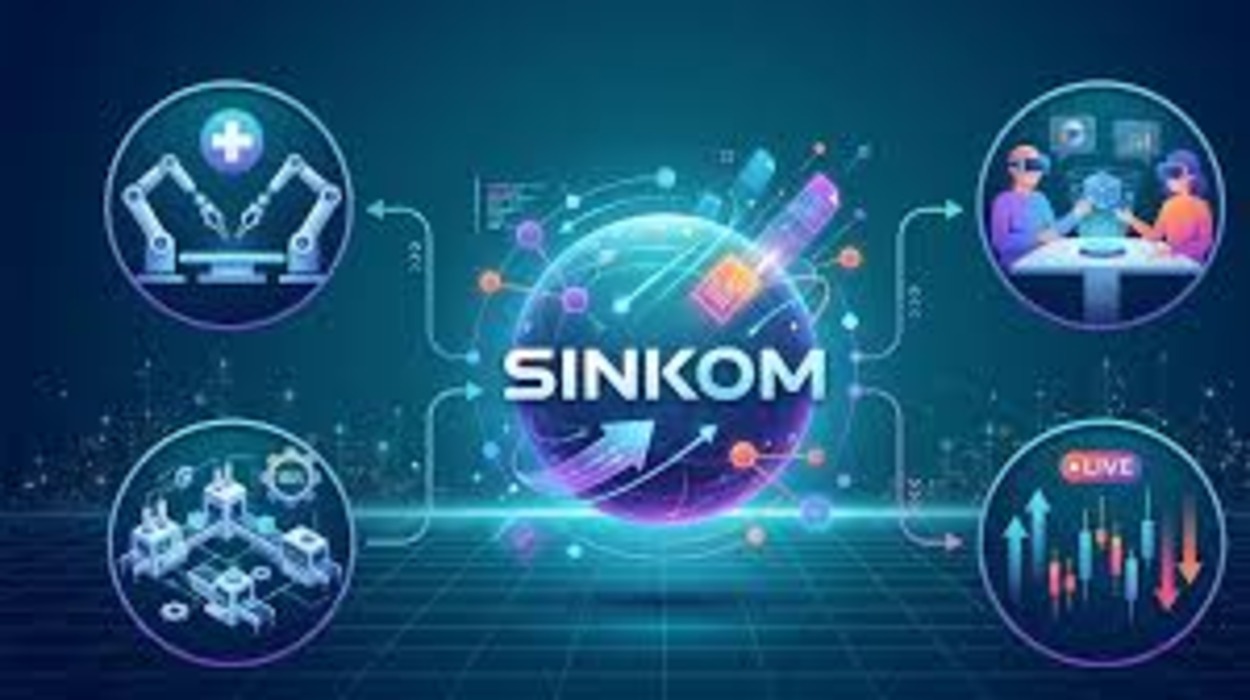
Think of a product launch. Marketing campaigns, backend infrastructure, customer support, and analytics all need to work in harmony. Without sinkom, these functions operate in silos, leading to delays, misalignment, and missed opportunities. With sinkom, they move as a coordinated system, responding dynamically to user behavior and market signals.
The difference is not just efficiency—it’s agility.
The Evolution That Led to Sinkom
To understand why sinkom is gaining attention, it helps to look at how digital systems have evolved. Early business operations relied heavily on manual coordination—emails, meetings, and static reports. While manageable at small scales, this approach quickly breaks down as complexity increases.
The introduction of automation improved efficiency but often created isolated workflows. Systems could perform tasks independently, but they lacked awareness of the broader context. This led to a new kind of fragmentation—automated, but disconnected.
Cloud computing and APIs brought systems closer together, enabling integration across platforms. Yet even with these advancements, true synchronization remained elusive. Data could move quickly, but alignment still required intervention.
Sinkom emerges as the next step: a model where synchronization is not an afterthought but a foundational principle.
Sinkom as a Competitive Advantage
For startups, sinkom is more than a technical upgrade—it’s a strategic differentiator. In fast-moving markets, the ability to respond quickly and coherently can define success.
Consider a fintech startup monitoring transaction activity. With sinkom, unusual patterns trigger real-time alerts, risk assessments update instantly, and user notifications are sent without delay. The entire system reacts as one, reducing risk and enhancing user trust.
In e-commerce, sinkom enables dynamic pricing, inventory updates, and personalized recommendations to happen simultaneously. Customers experience a seamless journey, while businesses gain better control over operations.
The advantage lies in alignment. When systems are synchronized, decisions are faster, actions are more precise, and outcomes are more predictable.
Key Elements of a Sinkom Framework
To bring sinkom to life, organizations need to focus on several interconnected elements. These components form the backbone of synchronized operations:
| Element | Description | Business Value |
|---|---|---|
| Real-Time Data Flow | Continuous movement of data across systems | Immediate insights and responsiveness |
| Contextual Awareness | Systems understand the broader operational environment | Smarter, more relevant decisions |
| Event-Driven Architecture | Actions triggered by real-time events | Reduced latency and increased automation |
| Unified Communication | Seamless interaction between tools and teams | Improved collaboration and alignment |
| Feedback Loops | Continuous learning from system outputs | Ongoing optimization and improvement |
Together, these elements create an ecosystem where synchronization is embedded into every layer of operation.
Challenges in Implementing Sinkom
While the benefits of sinkom are clear, achieving it is not without challenges. One of the primary obstacles is legacy infrastructure. Many organizations rely on systems that were not designed for real-time synchronization, making integration difficult.
There is also the issue of data consistency. Ensuring that all systems operate on the same, up-to-date information requires robust data management practices. Without this, synchronization can lead to confusion rather than clarity.
Security is another concern. As systems become more interconnected, the potential attack surface increases. Protecting data while maintaining real-time access requires careful design and governance.
Finally, there is the human factor. Sinkom requires a cultural shift toward transparency and collaboration. Teams must be willing to share information and align their workflows with broader organizational goals.
The Role of AI in Advancing Sinkom
Artificial intelligence plays a pivotal role in enabling sinkom. Machine learning models can process vast amounts of data, identifying patterns and triggering actions in real time. This allows systems to move beyond simple synchronization toward intelligent coordination.
For example, AI can predict customer behavior based on historical data, enabling proactive engagement. It can also optimize resource allocation, ensuring that systems operate efficiently under varying conditions.
However, the integration of AI must be approached thoughtfully. Transparency and explainability are essential to maintain trust, particularly in industries where decisions have significant consequences.
Designing Systems for Sinkom
Building a sinkom-driven organization requires intentional design. It starts with architecture. Event-driven systems, where actions are triggered by real-time events, are particularly well-suited to sinkom.
APIs and integration layers must be designed for speed and reliability. Data pipelines should support continuous flow rather than batch processing. Observability tools are essential, providing visibility into how systems interact and where improvements can be made.
Equally important is the user experience. Interfaces should reflect the synchronized nature of the system, providing real-time insights and actionable information. This ensures that human decision-makers remain aligned with automated processes.
Sinkom in the Context of Startup Growth
As startups scale, the need for sinkom becomes more pronounced. Early-stage companies often rely on informal coordination, but this approach does not scale. Without a structured framework, growth leads to fragmentation.
Sinkom provides a path forward. By embedding synchronization into the core of their operations, startups can maintain agility even as complexity increases. This allows them to scale without losing the clarity and speed that define their early success.
Moreover, sinkom supports innovation. When systems are aligned, teams can experiment more freely, knowing that changes will propagate consistently across the organization.
The Future of Sinkom in Digital Ecosystems
Looking ahead, sinkom is likely to become a standard expectation rather than a differentiator. As technologies such as edge computing, IoT, and decentralized systems gain traction, the need for real-time coordination will only grow.
We can expect to see new tools and platforms designed specifically to support sinkom. These may include advanced event-streaming systems, AI-driven orchestration tools, and standardized protocols for real-time data exchange.
At the same time, the principles of sinkom will extend beyond technology. Organizations will need to adopt new ways of working, emphasizing collaboration, transparency, and continuous learning.
Conclusion: Why Sinkom Is the Future of Coordination
Sinkom is not just a technical concept—it’s a new operating logic for the digital age. It reflects a shift from isolated systems to interconnected ecosystems, from delayed responses to real-time action, and from fragmented workflows to unified operations.
For founders, entrepreneurs, and tech professionals, embracing sinkom is about more than improving efficiency. It’s about building organizations that can think, respond, and evolve as a single, synchronized entity.
In a world where speed and complexity go hand in hand, that ability is not just valuable—it’s essential.